End of Non-Biometric Russian Passports: Key Changes and Deadlines in Poland and Europe (2024–2026)
Decisions made by the governments of Poland, the Baltic states, the Czech Republic, as well as France and Germany, constitute a coherent element of a strategy to seal borders against uncontrolled migration, infiltration by special services, and document forgery, which is significantly easier in the case of versions lacking electronic media [1].
The evolution of security standards for the external borders of the European Union and Schengen associated states has radically accelerated in recent years. This process, determined both by technological progress in biometrics and the rapid shift in the geopolitical security paradigm in Central and Eastern Europe, finds its fullest reflection in the systematic withdrawal of non-biometric identity documents issued by the Russian Federation from international circulation.
Legal Framework and Schedule for Phasing Out Passports in the Republic of Poland
The key document regulating the status of Russian travel documents on the territory of Poland is the decision of the Minister of the Interior and Administration, which introduces a two-stage process for ceasing the recognition of non-biometric passports [4]. This decision, announced and notified to the European Commission, is based on the priority of strengthening national security and the necessity of adapting national procedures to the requirements of the EU Entry/Exit System (EES) [4].
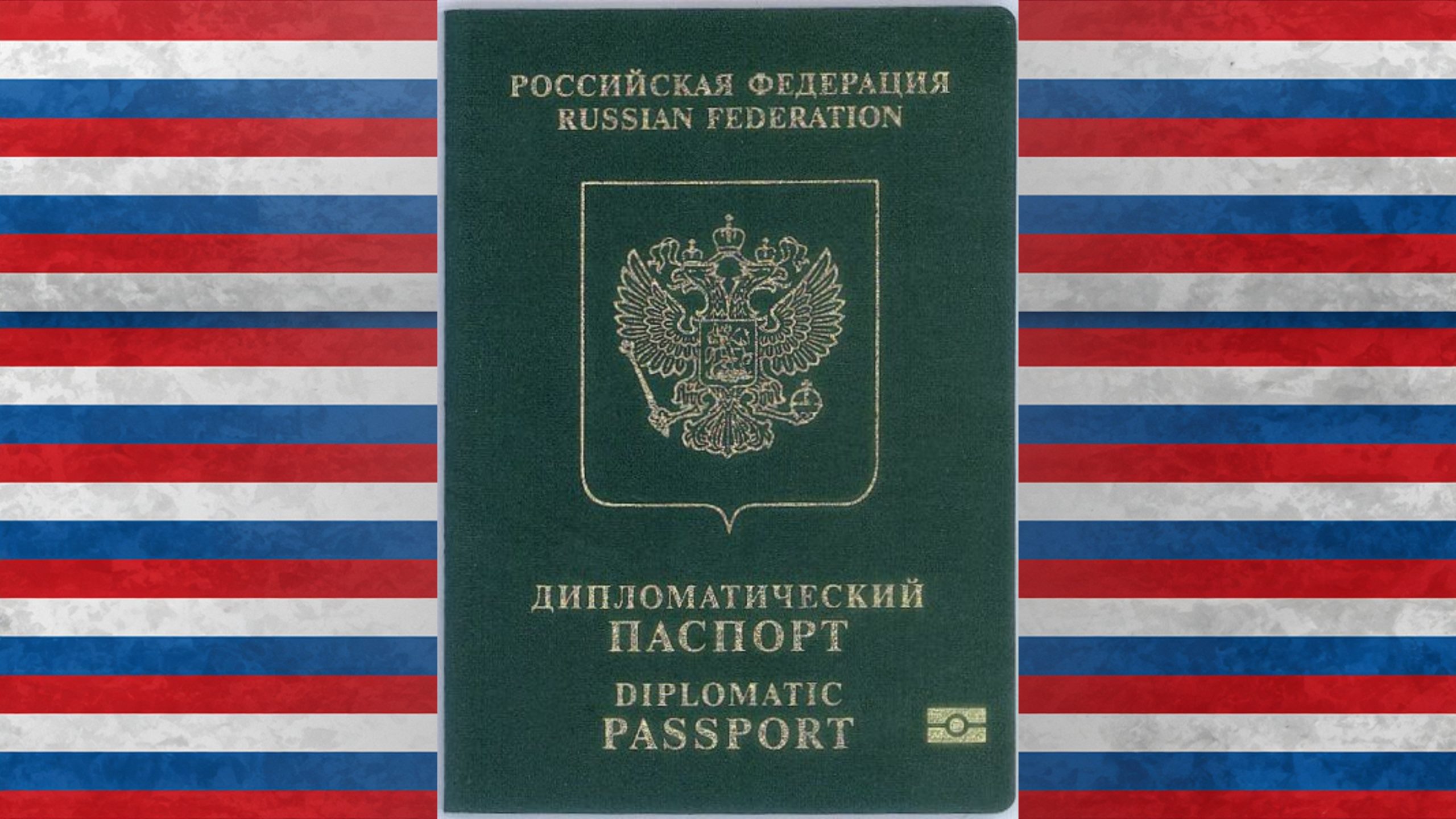
According to official communiqués from the Office for Foreigners (UdSC), the schedule of changes was precisely divided to enable a smooth transition to new standards and minimize the risk of sudden exclusion of persons legally residing in the country [4]. The first stage concerns official documents. Russian diplomatic passports and service passports in the non-biometric version ceased to be recognized by Poland as of January 1, 2026 [1]. This means that from this date, no person using such a document has the right to cross the border of the Republic of Poland or use it for identification in administrative proceedings unless they simultaneously possess a valid biometric passport.
The second, much broader stage, concerns Russian citizens holding ordinary non-biometric passports (so-called 5-year passports). These documents will cease to be recognized by Poland as of April 1, 2026 [4]. Setting this deadline several months after the diplomatic passports was intended to create a transition period. It allows Russian citizens residing in Poland to take steps to obtain replacement biometric documents at consular posts, which is necessary to maintain continuity of legal residence [1].
| Category of Russian Travel Document | Date of Cessation of Recognition in Poland | Legal Basis and Notification |
| Diplomatic Passport (non-biometric) | January 1, 2026 | Decision of MoI, EC notification [4] |
| Service Passport (non-biometric) | January 1, 2026 | Decision of MoI, EC notification [4] |
| Ordinary Passport (non-biometric, 5-year) | April 1, 2026 | Decision of MoI, UdSC announcement [1] |
| Biometric Passport (10-year with chip) | Recognized indefinitely | ICAO Standard, EES compliance [9] |
This mechanism fits into a broader trend of harmonizing document standards within the Schengen area, suggesting that other member states may soon take identical steps if they have not already done so [1]. The introduction of these restrictions is argued by the fact that non-biometric passports lack modern electronic security features, making them vulnerable to forgery and hindering automatic identity verification at border crossings equipped with biometric systems [1].
Technical and Visual Characteristics of Russian Passports in the PRADO System
To precisely identify documents subject to phasing out, an analysis of the Public Register of Authentic Travel and Identity Documents Online (PRADO), managed by the Council of the European Union, is necessary [11]. This system provides detailed technical descriptions and visual security elements that allow border guard officers, bank employees, or notaries to distinguish authentic documents from forged ones [11].
Analysis of the Ordinary Passport (RUS-AO-02003)
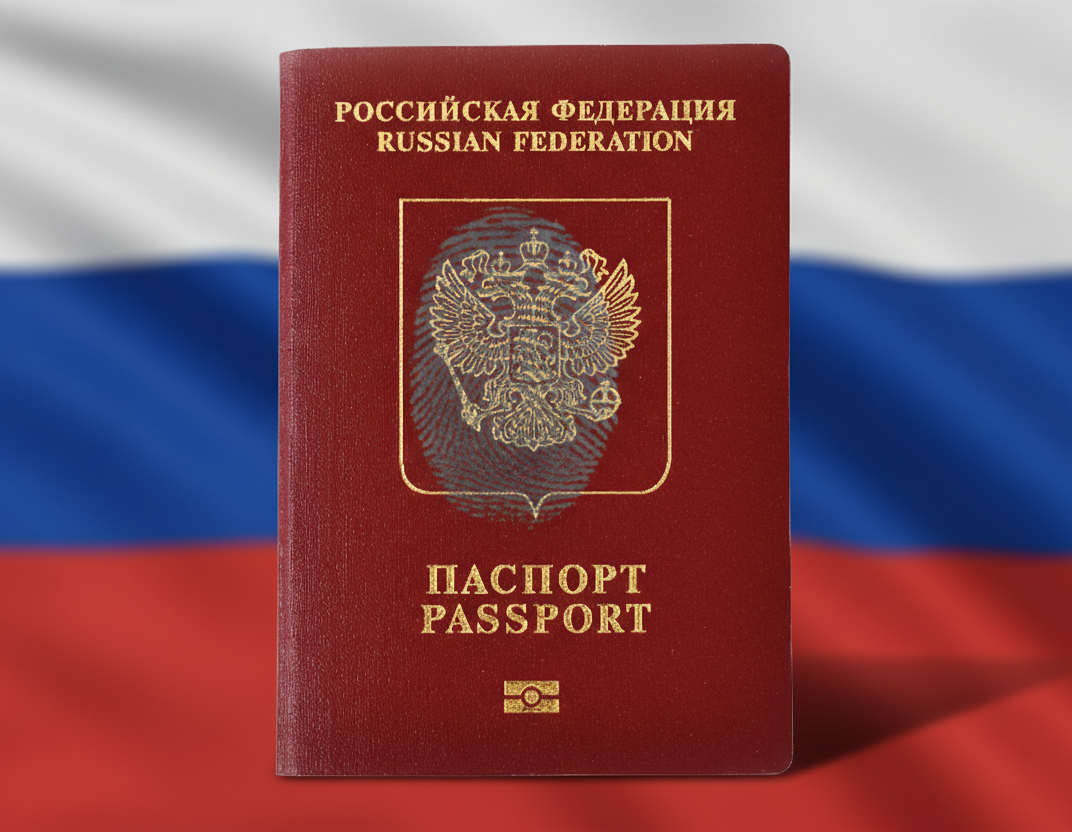
The document designated in the PRADO database with the code RUS-AO-02003 represents the classic model of the Russian ordinary passport (type O), which will not be honored in Poland from April 1, 2026 [12]. It is a single-component booklet with a burgundy cover made of soft canvas [12].
The main visual features and security elements of this document include:
-
Dimensions and Structure: Standard ID-3 format (88 mm x 125 mm), containing 36 pages [12].
-
Personalization Page: Made of paper secured with laminate, on which data is applied via inkjet or laser printing. Unlike biometric versions, it does not contain a rigid polycarbonate card with an embedded microprocessor [12].
-
UV Security: Fluorescent elements are used in the paper structure and printing inks, becoming visible under ultraviolet light. This particularly applies to fibers distributed in the paper pulp on visa pages (3–33) [12].
-
Watermark: Visible against the light, depicting geometric motifs or the state coat of arms, identical to patterns used in related series of Russian documents [12].
-
Absence of E-Passport Symbol: The cover of this document does not display the characteristic gold ICAO logo (a rectangle with a circle), which is the simplest way to visually identify the document as non-biometric [9].
Characteristics of Diplomatic and Service Passports
Special passports of the Russian Federation, the non-biometric versions of which were withdrawn from use in Poland on January 1, 2026, have distinct color schemes facilitating their rapid categorization [13].
-
Diplomatic Passport (RUS-AD): Characterized by a green cover with a gold coat of arms and the inscription “ПАСПОРТ ДИПЛОМАТИЧЕСКИЙ”. Biometric versions of this document have a built-in chip and a 10-year validity period, whereas 5-year versions, devoid of electronics, are currently being systematically rejected by European states [13].
-
Service Passport (RUS-AS): Has a blue cover. It is intended for government officials and military personnel sent abroad for official purposes. As with diplomatic passports, only versions equipped with a biometric carrier remain in circulation recognized by the Polish Border Guard [13].
Contemporary biometric passports (new generation, issued since 2010) have 46 pages and are characterized by a 10-year validity period [13]. Their key element is a polycarbonate card with an RFID chip encoding the holder’s biographical data and biometric features, protected by Basic Access Control (BAC) technology [13]. This technology prevents remote data reading without prior physical access to the MRZ (Machine Readable Zone) at the bottom of the personalization page [13].
Regional Experience: Lithuania as a Precursor of Change
The Polish policy of ceasing recognition of Russian non-biometric passports is not an isolated phenomenon but fits into coordinated actions of NATO and EU eastern flank states. A particularly significant example is Lithuania, which introduced analogous restrictions well in advance [2].
According to a decision by the Lithuanian Ministry of Foreign Affairs and the Ministry of the Interior, Lithuania ceased to recognize Russian non-biometric passports as documents entitling entry into the country from June 1, 2025 [2]. The Lithuanian implementation model was characterized by several specific solutions that can serve as a reference point for other countries:
-
Specifics of Transit to Kaliningrad: Due to its unique geographical location, Lithuanian regulations regarding non-biometric passports did not cover citizens of the Russian Federation traveling by rail transit between the Königsberg (Kaliningrad) region and the territory of mainland Russia [2]. In this specific corridor, documents of a lower security standard are still honored, resulting from existing agreements on the Facilitated Transit Document (FTD) [2].
-
Humanitarian and Political Clause: Lithuania provided for the possibility of making exceptions for persons whose entry is in the interest of the state or dictated by humanitarian reasons. This particularly applies to representatives of the Russian democratic opposition, independent journalists, and human rights defenders who may not have the physical ability to obtain a biometric passport from the regime persecuting them [2].
-
National Security Argumentation: Lithuanian Minister of Foreign Affairs Kęstutis Budrys (sic) explicitly linked these restrictions to protection against the actions of Russian special services (e.g., GRU). It was emphasized that agents participating in sabotage and terrorist operations in Europe repeatedly used various identities based precisely on non-biometric travel documents, which are significantly easier to forge and harder to automatically verify in Schengen databases [2].
The Lithuanian implementation set a standard for the region, showing that ceasing the recognition of non-biometric passports is an effective tool for migration control and counter-intelligence prevention [2].
Policy of Baltic and Central European States: Latvia, Estonia, Czech Republic
The next states that decided to drastically tighten document requirements are Latvia and Estonia. Their approach is characterized by high rigor resulting from the immediate neighborhood with the Russian Federation.
Latvia: Schedule and Consequences for Residents
The Republic of Latvia ceased to recognize Russian non-biometric passports on July 15, 2025 [10]. From that day, these documents cannot be used for border crossing, applying for visas, or residence permits.
Key aspects of the Latvian regulation include:
-
Six-Month Transition Period: Persons holding residence permits issued before July 2025 could use old passports only until January 15, 2026 [17]. After this deadline, every resident must possess a biometric document under penalty of losing legal residence status.
-
Transit Refusal: Russian citizens without a chip passport are banned from entering Latvia even for transit to other states, which significantly complicated travel logistics for persons living in Western Europe [17].
-
Administrative Sanctions: Staying on Latvian territory with a document that has ceased to be recognized is treated as a violation of immigration law (Section 4 Immigration Law), resulting in administrative fines and a possible deportation order [10].
Estonia: Blockade of Land and Sea Borders
Estonia ceased to recognize non-biometric Russian documents on March 31, 2025 [9]. The Estonian Ministry of Foreign Affairs indicated that non-recognition of the document means the inability to cross land, sea, and air borders [9].
For persons holding Estonian residence cards, a deadline of September 30, 2025, was set to exchange the document [9]. After this date, a non-biometric passport, although accepted as an identity document within the country (for official purposes), no longer entitles re-entry into Estonia after any foreign travel [9]. These restrictions apply to all age groups, including children, forcing Russian families to comprehensively update their documentation [9].
Czech Republic: Early Implementation and Penalty System
The Czech Republic was one of the first countries to initiate this process, introducing restrictions as early as July 3, 2024 [20]. The Czech model provided for a transition period for residents until March 31, 2025 [20]. After this date, every Russian citizen present in the Czech Republic without a biometric passport is considered a person holding an invalid travel document, which involves fines imposed by the Foreign Police [20].
The Czech Ministry of the Interior introduced a strict requirement to report a new document within 3 working days of obtaining it [21]. Exceptions to these rules are few and mainly concern persons covered by the “Civil Society” program and children under 15 years of age, although these facilitations are also being gradually phased out [20].
Situation in Western Europe: France, Germany, and the Impact of the EES
The process of phasing out Russian non-biometric passports is not limited only to the eastern flank of the EU. Key states of the “old” Union also recognized the need to tighten controls.
France: Visa and Border Restrictions
France ceased to recognize ordinary Russian non-biometric passports on April 14, 2025 [22]. From that moment, Schengen visa applications submitted using a 5-year document are automatically rejected, with the exception of children under 15 years of age [22].
The practical effects of the French decision were visible almost immediately:
-
Airlines: Carriers such as Turkish Airlines began refusing boarding to passengers with non-biometric passports flying to France, even if they held visas issued before the rule change [25].
-
Total Blockade from June 1, 2025: French border services stopped admitting holders of old passports regardless of the visa issuance date, leading to numerous deportations at airports in Paris and Nice [25].
-
Necessity of a 10-Year Passport: French consulates recommend that Russian citizens hold two passports simultaneously (which is permitted by Russian law) to be able to travel freely to countries accepting older designs, while possessing a biometric variant for entry into France [25].
Germany: Synchronization with EES
Germany announced the cessation of acceptance of Russian passports without biometric data as of January 1, 2026 [24]. This decision is directly correlated with the launch of the EES and the necessity of strengthening security in the face of the increasing number of attempts to illegally cross borders [1].
The German Embassy in Moscow officially instructed Russian citizens that from the beginning of 2026, possessing a document with a chip will be an unconditional requirement for obtaining any visa [24]. Setting the same date as in Poland for diplomatic passports suggests close cooperation between the border services of both countries to prevent “document tourism” within the Schengen area.
| State | End Date of Recognition | Status for Residents | Main Reasons |
| Poland | 01.01.2026 (dip) / 01.04.2026 (ord) | transition period until 01.04.2026 | security, EES system [4] |
| Germany | January 1, 2026 | no recognition upon entry | border modernization, EES [24] |
| Lithuania | June 1, 2025 | document exchange until 01.12.2025 | fighting GRU infiltration [2] |
| Latvia | July 15, 2025 | transition period until 15.01.2026 | compliance with immigration law [17] |
| Estonia | March 31, 2025 | transition period until 30.09.2025 | ICAO standards, security [18] |
| Czech Republic | July 2024 | transition period until 31.03.2025 | early border sealing [20] |
| France | April/June 2025 | no exceptions for adults | migration control, EES [22] |
The Role of the Entry/Exit System (EES) in Eliminating Old Documents
The fundamental reason why EU member states are moving away from recognizing non-biometric passports is the implementation of the Entry/Exit System (EES), which was officially launched on October 12, 2025 [6]. EES is an automated IT system used to register third-country nationals traveling for short-term stays [6].
This system completely changes the way border traffic is handled:
-
End of Stamps: EES replaces traditional passport stamping with an electronic record in the central Schengen database [6].
-
Biometrics Collection: Upon the first entry after the system launch, four fingerprints and a facial scan are taken from every traveler (including Russian citizens) [6].
-
Technical Compatibility: The EES system is based on automatic reading of data from microprocessors embedded in travel documents. Non-biometric passports do not possess a data carrier that could be integrated with EES readers in a way that guarantees information authenticity [6].
-
Combating Abuse: EES automatically calculates the traveler’s duration of stay and identifies persons who have exceeded the allowed 90 days in a 180-day period. Biometric passports, thanks to unique cryptographic keys, make it impossible to cheat the system by changing one’s surname in a new paper passport [6].
The launch of EES meant that possessing a biometric passport ceased to be merely a “recommendation” and became a technical operational requirement. By the summer of 2026, the system is expected to be fully integrated at all border crossings of the Schengen area, which will definitively close the road to Europe for persons using older generation documents [6].
Implications for Russian Citizens in Poland and Their Employers
For thousands of Russian citizens living in Poland, setting April 1, 2026, as the final date for recognizing non-biometric passports brings specific legal and logistic challenges [1].
-
Legalization of Stay and Work: The Office for Foreigners emphasizes that a valid travel document is necessary to apply for a temporary residence permit, permanent residence permit, or long-term EU resident permit [1]. If a foreigner does not exchange their passport for a biometric one before April 2026, they may encounter difficulties in extending their legal residence status.
-
Employer Responsibility: Companies employing Russians must verify the passport types of their employees [1]. In the case of foreign business trips, an employee with a non-biometric passport may be detained at the border or deported, exposing the employer to financial losses and legal problems related to carrier liability [1].
-
Consulate Capacity: Russian diplomatic missions report extended waiting times for the issuance of 10-year biometric passports, often exceeding 3 months [1]. The accumulation of applications just before the deadlines of January 1 and April 1, 2026, may lead to paralysis of these offices and leave many people without valid documents [8].
-
Loss of Visa and Residence Card Validity: There is a risk that changing a passport to a biometric one will require transferring the visa or updating data in the residence card. Some countries, like the Czech Republic, require notification of a document change within an extremely short time, which in Poland may also become a subject of intensified checks by the Border Guard [8].
Document Security and Risk of Forgery: Why Only Biometrics?
From the point of view of law enforcement and intelligence services, moving away from 5-year (non-biometric) passports is crucial due to their archaic construction. Analysis of PRADO and incidents reported by Lithuania and France confirm that these documents are a “soft target” for forgers [2].
-
Absence of 1:1 Identity Verification: In a biometric passport, the photo in the chip is digitally signed by the issuing authority. At the border, the system compares the traveler’s face with the photo from the chip, not just with the printout on paper, which can be relatively easily swapped [9].
-
Intelligence Infiltration: Utilizing non-biometric passports to create so-called “legends” (artificial identities) was a common practice of Russian services. Introducing the biometrics requirement drastically raises the cost and difficulty of creating a credible fake identity, as it requires entering data into central population registry systems with appropriate digital security measures [2].
-
ICAO Standards: Russian 5-year passports do not fully meet the latest recommendations of the International Civil Aviation Organization (ICAO) regarding electronic document security, placing them in the same category as documents from countries with very low levels of administrative control [2].
In summary, the decision of the Republic of Poland to cease recognizing non-biometric passports of the Russian Federation from January 1 (special documents) and April 1, 2026 (ordinary documents) is an element of a broad European defense strategy. Integration with the EES system, strengthening border control, and eliminating documents vulnerable to forgery are necessary steps in the current geopolitical situation. For holders of such documents, the coming months are the last moment to regulate their document situation to avoid exclusion from the possibility of traveling and staying in the Schengen area [1].
Sources (1–24)
-
https://www.gov.pl/web/udsc/zaprzestanie-uznawania-przez-polske-rosyjskich-paszportow-niebiometrycznych (UdSC – Decision on phasing out Russian non-biometric passports)
-
https://wilno.tvp.pl/86870321/litwa-nie-bedzie-juz-uznawac-niebiometrycznych-paszportow-obywateli-rosji (TVP Wilno – Report on the implementation of new rules in Lithuania)
-
https://www.urm.lt/en/news/928/from-1-june-lithuania-will-no-longer-recognize-non-biometric-passports-issued-by-russia:44207 (MFA Lithuania – Announcement on cessation of recognition of non-biometric documents)
-
https://www.gov.pl/web/udsc/zaprzestanie-uznawania-przez-polske-rosyjskich-paszportow-niebiometrycznych (Gov.pl Portal – Notification of MoI decision to the European Commission)
-
https://en.migrant.wsc.mazowieckie.pl/pl/messages/announcement-of-the-Office-for-Foreigners-that-Poland-will-no-longer-recognize-Russian (Voivodeship Office – Information on phasing out foreigners’ documents)
-
https://home-affairs.ec.europa.eu/policies/schengen-borders-and-visa/smart-borders/entry-exit-system_en (European Commission – Objectives and functioning of the EES system)
-
https://www.gov.pl/web/udsc/zaprzestanie-uznawania-przez-polske-rosyjskich-paszportow-niebiometrycznych (UdSC – Schedule for phasing out ordinary and diplomatic passports)
-
https://warsaw.kdmid.ru/en/ (Russian Embassy in Poland – Information on deadlines for issuing 10-year passports)
-
https://vm.ee/en/news/frequently-asked-questions-about-recognition-non-biometric-russian-passports (MFA Estonia – Explanations regarding ICAO standards and security)
-
https://www.mfa.gov.lv/en/article/latvia-will-no-longer-recognise-russian-federation-citizens-non-biometric-passports (MFA Latvia – Analysis of threats related to non-biometric documents)
-
https://www.consilium.europa.eu/prado/en/prado-start-page.html (Council of the EU – Official access to the PRADO document register)
-
https://www.consilium.europa.eu/prado/pl/RUS-AO-02003/index.html (Council of the EU – Technical card of the Russian ordinary passport RUS-AO-02003)
-
https://mid.ru/en/foreign_policy/news/1650742/ (MFA Russia – Official description of categories and types of travel documents)
-
https://www.urm.lt/en/news/928/from-1-june-lithuania-will-no-longer-recognize-non-biometric-passports-issued-by-russia:44207 (MFA Lithuania – Joint decree on tightening border control)
-
https://wilno.tvp.pl/86870321/litwa-nie-bedzie-juz-uznawac-niebiometrycznych-paszportow-obywateli-rosji (TVP Wilno – Lithuanian model of identity verification at the border)
-
https://eur-lex.europa.eu/legal-content/ET/ALL/?uri=LEGISSUM%3Al14556 (EUR-Lex – EU framework for FTD facilitated transit through Lithuania)
-
https://www.mfa.gov.lv/en/questions-and-answers-non-recognition-russian-federation-non-biometric-passports-republic-latvia (MFA Latvia – Transition periods and sanctions for residents)
-
https://vm.ee/en/news/frequently-asked-questions-about-recognition-non-biometric-russian-passports (MFA Estonia – Border blockade for holders of passports without a chip)
-
https://vm.ee/en/news/holders-estonian-or-eu-residence-permit-non-biometric-russian-passport-have-until-september-30 (MFA Estonia – Document exchange deadline for residence card holders)
-
https://ipc.gov.cz/en/changes-to-the-recognition-of-travel-documents-issued-by-the-russian-federation/ (MoI Czechia – Abandonment of 5-year documents from 2024)
-
https://ipc.gov.cz/en/changes-to-the-recognition-of-travel-documents-issued-by-the-russian-federation/ (MoI Czechia – Procedures for notifying new biometric passports)
-
https://france-visas.gouv.fr/en/russia (France-Visas – French visa restrictions for Russian citizens)
-
https://www.service-public.gouv.fr/particuliers/vosdroits/F21921?lang=en (Service-Public.fr – Rights of foreigners and document requirements in France)
-
https://germania.diplo.de/ru-de/service/05-visaeinreise (German Embassy – German biometric requirements from January 2026)
Cited Works (1–27)
-
Poland will no longer accept non-biometric Russian passports from 1 April 2026 – VisaHQ, https://www.visahq.com/news/2026-01-21/pl/poland-will-no-longer-accept-non-biometric-russian-passports-from-1-april-2026/
-
From 1 June, Lithuania will no longer recognize non-biometric passports issued by Russia, https://www.urm.lt/en/news/928/from-1-june-lithuania-will-no-longer-recognize-non-biometric-passports-issued-by-russia:44207
-
Russian Non-Biometric Passports No Longer Accepted in Lithuania from June – News, https://www.atozserwisplus.com/immigration-news/russian-non-biometric-passports-no-longer-accepted-in-lithuania-from-june
-
Zaprzestanie uznawania przez Polskę rosyjskich paszportów niebiometrycznych – Urząd do Spraw Cudzoziemców – Portal Gov.pl, https://www.gov.pl/web/udsc/zaprzestanie-uznawania-przez-polske-rosyjskich-paszportow-niebiometrycznych
-
Poland No Longer Recognizes Non‑Biometric Russian Passports | Envoy Global, Inc, https://www.envoyglobal.com/news-alert/poland-no-longer-recognizes-non-biometric-russian-passports/
-
European border with biometrics: what awaits Russians after October 12, 2025, https://visa-digital-nomad.com/news/european-border-with-biometrics/
-
Announcement of the Office for Foreigners – Poland will no longer recognize Russian non-biometric passports | Migrant WSC, https://en.migrant.wsc.mazowieckie.pl/pl/messages/announcement-of-the-Office-for-Foreigners-that-Poland-will-no-longer-recognize-Russian
-
Poland Sets Deadline to Stop Accepting Non-Biometric Russian Passports – VisaHQ, https://www.visahq.com/news/2026-01-27/pl/poland-sets-deadline-to-stop-accepting-non-biometric-russian-passports/
-
Frequently asked questions about the recognition of non-biometric Russian passports, https://vm.ee/en/news/frequently-asked-questions-about-recognition-non-biometric-russian-passports
-
Latvia will no longer recognise the Russian Federation citizen’s non-biometric passports, https://www.mfa.gov.lv/en/article/latvia-will-no-longer-recognise-russian-federation-citizens-non-biometric-passports
-
Public Register of Travel and Identity Documents Online – Wikipedia, https://en.wikipedia.org/wiki/Public_Register_of_Travel_and_Identity_Documents_Online
-
PRADO – RUS-AO-02003 – Council of the European Union, https://www.consilium.europa.eu/prado/pl/RUS-AO-02003/index.html
-
Russian passport – Wikipedia, https://en.wikipedia.org/wiki/Russian_passport
-
Acceptance of non-biometric passports of the Russian Federation citizens will be suspended, https://visa.vfsglobal.com/rus/en/ltu/news/non-biometric-passport-suspended
-
Litwa nie będzie już uznawać niebiometrycznych paszportów obywateli Rosji – TVP Wilno, https://wilno.tvp.pl/86870321/litwa-nie-bedzie-juz-uznawac-niebiometrycznych-paszportow-obywateli-rosji
-
Transit Kaliningrad – Russian mainland: proposals and implementation | EUR-Lex, https://eur-lex.europa.eu/legal-content/ET/ALL/?uri=LEGISSUM%3Al14556
-
Questions and answers on non-recognition of Russian Federation non-biometric passports in the Republic of Latvia | Ārlietu ministrija, https://www.mfa.gov.lv/en/questions-and-answers-non-recognition-russian-federation-non-biometric-passports-republic-latvia
-
Holders of an Estonian or EU residence permit with a non-biometric Russian passport have until September 30, 2025 to apply for a biometric travel document – Copenhagen, https://copenhagen.mfa.ee/holders-of-an-estonian-or-eu-residence-permit-with-a-non-biometric-russian-passport-have-until-september-30-2025-to-apply-for-a-biometric-travel-document/
-
Holders of an Estonian or EU residence permit with a non-biometric Russian passport have until September 30, 2025 to apply for a biometric travel document | Välisministeerium, https://vm.ee/en/news/holders-estonian-or-eu-residence-permit-non-biometric-russian-passport-have-until-september-30
-
RESTRICTIONS FOR RUSSIANS AND BELARUSSIANS – Fragomen, https://www.fragomen.com/a/web/pejhqthGse233RRBBf2FcU/restrictions-for-belarussians-and-russians.pdf
-
Changes to the Recognition of Travel Documents Issued by the Russian Federation – IPC, https://ipc.gov.cz/en/changes-to-the-recognition-of-travel-documents-issued-by-the-russian-federation/
-
Russia – France-Visas, https://france-visas.gouv.fr/en/russia
-
France Visa for Russians 2025 – New Rules & Denials, https://eng.confidencegroup.ru/info/news/frantsiya-razreshila-vezd-grazhdanam-rf-s-zagranpasportami-srokom-deystviya-pyat-let-pri-nalichii-vi/
-
Bio min | vfsglobal, https://visa.vfsglobal.com/kaz/en/fra/news/bio-min
-
France has tightened entry for Russians with five-year passports, https://eng.confidencegroup.ru/info/news/frantsiya-uzhestochila-vezd-dlya-rossiyan-s-pyatiletnimi-zagranpasportami/
-
Niemcy zaostrzają przepisy wobec Rosjan. Litwini wyrzucali ich z pociągów – Podróże Onet, https://podroze.onet.pl/aktualnosci/kolejny-kraj-z-obostrzeniami-dla-rosjan-litwini-wyrzucali-ich-z-pociagow/h6dghy7
-
Russia Urges Citizens to Renew Passports as EU’s Digital Entry System Deadline Looms – The Moscow Times, https://www.themoscowtimes.com/2026/01/15/russia-urges-citizens-to-renew-passports-as-eus-digital-entry-system-deadline-looms-a91685